 NEW GAME
Gully Rush
Indian roads. No rules.
Udata Udata Uch is our first-person mango-farm slingshot game. The scene is a summer farm: mangoes ripening overhead, a basket waiting below, and squirrels who have strong opinions about whose fruit this really is. Your job is to fill your basket, outsmart the squirrels, and let Appaiah, the farm's elder, enjoy his sleep undisturbed. It sounds gentle, and the first plot is, but across twelve farm plots the game builds into a proper test of aim, timing and nerve. This guide explains the loop, the habits that fill a basket quickly, and the mistakes that empty one.
Each plot is a small puzzle of position and timing. You place your basket where falling mangoes will land, then use the slingshot to knock fruit loose so it drops where you want it. A mango you knock down carelessly is a mango the ground or the squirrels get. A mango you plan for, placed basket first and shot second, is points in hand. That order, basket before shot, is the whole game in miniature. Whenever you catch yourself firing first and scrambling second, stop, breathe, and reset the order.
Your basket is your plan made visible. Before your first shot on any plot, look at where the fruit hangs and where it will naturally fall, and put the basket under the richest cluster rather than the single most tempting mango. Clusters forgive small errors; a lone mango does not. As plots progress, fruit spreads out and one position will not cover everything, so think in sequence: harvest this cluster, move, harvest the next. Moving the basket deliberately between groups is almost always faster than stretching for long, hopeful shots from one spot.
Slingshot aim rewards calm. Draw, settle, and release in one smooth intention rather than holding the shot so long that your aim wanders. Watch the fruit, not just your aim point: a mango that sways will be somewhere slightly different by the time your shot arrives, so lead the sway gently on breezy plots. If a shot misses, read it before firing again. Was it high, low, early, late? One corrected shot is worth three repeated ones, and the squirrels are counting on you wasting the difference.
The squirrels are not decoration; they are the opposition. Fallen fruit left uncollected is their opportunity, and a plot where you knock down more than you collect is a plot you are farming for them. The counter is rhythm: knock down a small group, collect, then knock down the next. Greedy players create feasts. Patient players create full baskets. When squirrels pressure a particular side of the plot, change your order and harvest that side first while the fruit is still safely overhead. Treat them as a timer with whiskers: their presence tells you which fruit is most urgent, not which shot is most fun.
The twelve farm plots are a gentle curriculum. Early plots teach placement and basic aim with generous clusters. Middle plots spread the fruit out, add distance, and make basket movement part of the puzzle. Later plots combine everything: wider spreads, trickier falls, and squirrels who give you less idle time. If a later plot feels impossible, the problem is usually an early habit that stopped working, most often firing before placing the basket or harvesting too much at once. Go back one plot, slow down, and rebuild the rhythm. Progress in this game is measured in calm, not just in cleared plots.
Appaiah's nap is the farm's comic conscience. The farm runs on the understanding that the elder rests while the work gets done around him, and your efficient, unbothered harvesting is what keeps that peace. Play smoothly, avoid panic near his spot, and consider a clean, quiet clearance the game's version of a perfect day: full basket, fed squirrels only on what you meant to spare, and not a single startled wake-up.
One: basket first, always. Two: harvest in small groups and collect before continuing. Three: correct each miss once, properly, instead of repeating it quickly. Four: move the basket between clusters instead of stretching for long shots. Five: when the plot feels chaotic, stop shooting for two seconds and re-read the tree. The fastest players look slow for exactly this reason: their pauses are where the plan happens.
Is Udata Udata Uch a shooting game or a puzzle game? Both, in that order of learning. The slingshot is the tool, but placement, sequence and timing decide your score far more than raw aim.
Why do the squirrels keep beating me to fruit? Because too much fruit is on the ground at once. Knock down less per round and collect between groups.
How many plots are there? Twelve, of increasing difficulty, from generous early clusters to wide, pressured late farms.
Can I replay a plot? Yes, and you should. Replaying an earlier plot with better habits is the quickest way to feel your own improvement.
Prefer cooking to farming? Read our Amruth Vilas guide. Prefer racing? Try the Paper Boat Race guide.
NEW GAMEIndian roads. No rules.
Tollywood Fight Night
Tiffin Troubles
The Mango Farm
 EARLY ACCESS
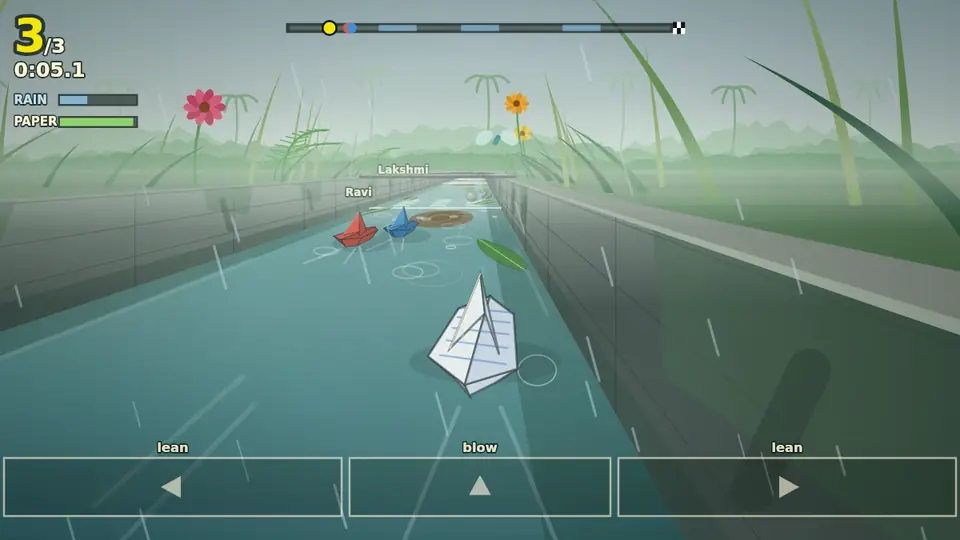
Paper Boat Race · వాన నీటిలో పడవ ప్రయాణం
 RANGOLI
Rangoli puzzles · ముగ్గుల పోటీ